I’ve cooked with the Babish carbon metal wok for more than two years, due to weekly stir-fries, deep-frying donuts, just a few clumsy seasoning experiments, and one regrettable popcorn session that taught me greater about oil smoke points than I cared to examine. If you desire a instantly, lived-in attitude in place of a sparkly unboxing, that is it. Consider this a long-term babish carbon metallic wok assessment with the emphasis where it matters: how it seasons, how it warps (or doesn’t), and what occurs while the honeymoon is over.
What you get while you make a choice carbon steel
Carbon steel woks take a seat in a sweet https://remingtonatem348.yousher.com/babish-carbon-steel-wok-review-searing-stir-fry-and-shallow-fry-tests spot between cast iron and stainless. They warmness swifter than cast iron, cool extra conveniently, and build a defensive patina that turns them semi-nonstick with use. Unlike nonstick coatings, the patina likes high warm and improves with abuse, so long as you learn to sparkling and re-season wisely. Stainless appears to be like exceptionally and handles acidic sauces, but it sticks and lacks the wok’s responsive warmness. If you choose wok hei on a abode burner, you prefer carbon metal.
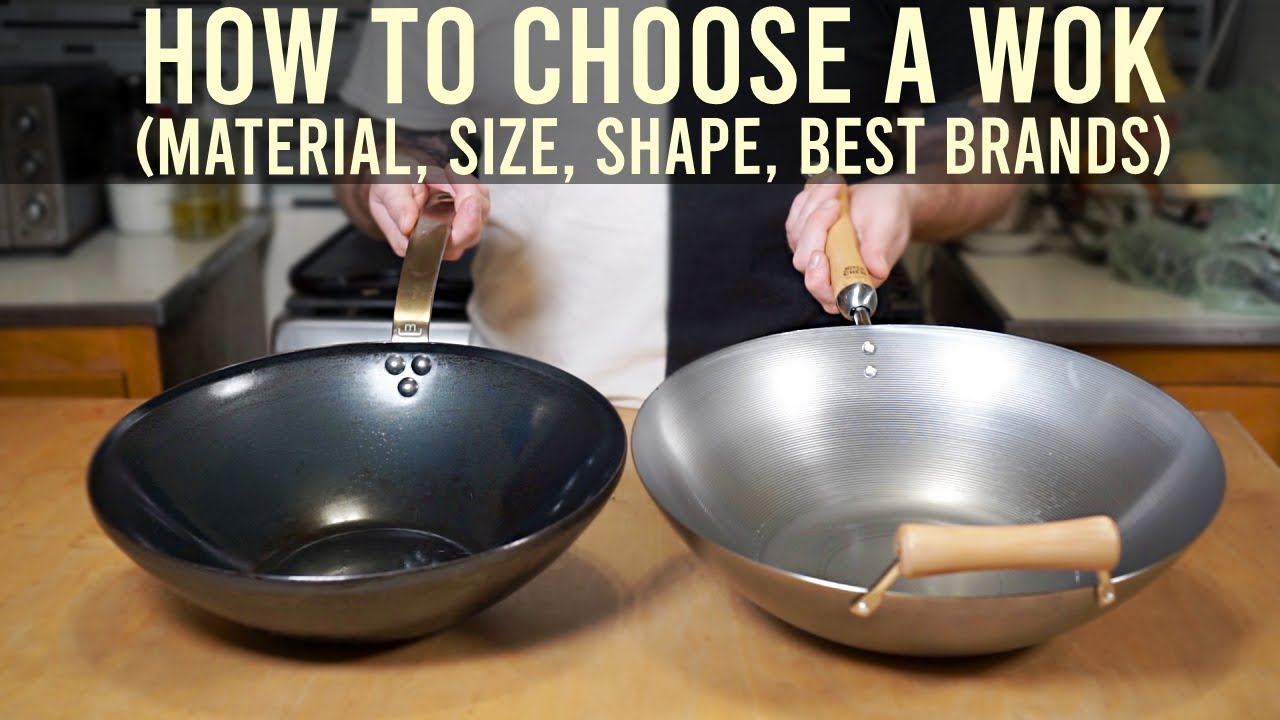
The Babish wok leans into that traditional setup: a stamped carbon metal body, a comfy address, and a flat base that sits securely on established Western ranges. It is unique for domestic cooks who don’t have a spherical-bottom ring or a committed prime-BTU burner. Mine is the 14-inch size, a simple diameter that balances batch measurement with maneuverability. The weight is achievable, lighter than a similar-dimension solid iron wok, and the handle angle works properly if you choose to toss materials with no spilling them into the abyss behind the range.
First season, 2d season, and the mess in between
My first seasoning cross changed into fairly textbook. I scrubbed off the manufacturing unit oil with sizzling water and a small volume of dish soap, dried it over low warmness till bone-dry, then wiped on a whisper-skinny coat of grapeseed oil. I heated it until the oil smoked and became from shiny to matte brown, rotated it, enable it cool, then repeated several times. The interior took on a mottled tea-brown coloration. After two more classes centred at the upper flared sides, I cooked a handful of scallions and ginger in oil, which helped push the preliminary shade deeper when flattening any residual steel odor.
Where many people get tripped up is that early patina behaves like a baby: fussy, inconsistent, and quick to scrape off if you happen to go too hard with a spatula. The first 3 or 4 chefs made that evident. Eggs caught except I over-oiled and preheated rigorously. A vinegary stir-fry lightened the color measurably, especially up high on the walls. None of this meant failure. The patina is a communication among warmth, oil, and time. By month two, with a continuous diet of fried rice, stir-fried greens, and noodle dishes, the inner took on a greater even gunmetal seem to be. That’s while the wok started to feel nonstick in a significant method. A tilt and shake may unlock chook bits that used to snatch, and a thin movie of oil shimmered across the surface in preference to pooling.
For every person new to carbon steel, the oil determination matters. Grapeseed, canola, sophisticated peanut, and rice bran have all worked for me. Flaxseed, even with the information superhighway lore, gave me a brittle layer once that flaked underneath steel spatulas. You need skinny coats, well-nigh invisible. If one could see a moist layer, this is an excessive amount of. I found out to warm the wok accurately formerly wiping on oil for touch-ups, then bring it to faded smoke and permit it cool slowly. That means outfitted a challenging, darkish patina that survived some run-ins with acidic sauces.
Daily cooking: warmness reaction and balance
On a accepted gas fluctuate with kind of 12,000 BTU on the most powerful burner, the Babish wok heats hastily and calmly sufficient for residence cooking. The flat backside is large sufficient to anchor firmly and offers decent touch location, which facilitates on electric coils and induction too. It is not going to mimic a Cantonese eating place’s one hundred,000 BTU jet, yet you will nevertheless trigger caramelization, push moisture off briskly, and construct a few char on scallions or red meat slices. The trick is to preheat till the first whisper of smoke, then upload oil and aromatics on the spot. Cold wok, bloodless oil is the enemy of wok hei.
One thing I understand is how the Babish wok settles down once I overload it just a little. A pound of chook thigh, sliced skinny, gained’t tank the temperature completely. It dips, then rebounds in a second or two, so I can continue issues transferring. With watery greens like zucchini or bean sprouts, a swift sear close to the ground, observed via stirring up the sides, continues the crowding from turning every part into a stew. The flared partitions deliver respiring room for steam to escape and make tossing relaxed, even in the event that your wrist isn’t made from titanium.
Warping: what passed off after two years
Let’s get to the spicy area. Carbon steel can warp whenever you mix a thin gauge with excessive heat and cold shocks. The Babish wok isn't paper-thin, but it sits within the mid-faded number to avoid weight affordable. After two years of familiar cooking and the occasional questionable selection, mine presentations a faint convexity if you happen to lay a straightedge throughout the flat base. We’re speakme a millimeter or so on one quadrant, barely noticeable except you move in the hunt for it. On gasoline, I do not think it. On a tumbler-ideal induction, I demonstrated a chum’s unit and seen a small wobble most effective at targeted heat phases. If you place confidence in best possible induction touch, that might count number.
How did it turn up? I traced it to 2 different moments: a deep-frying session at high warmness followed by an impatient rinse, and a cold tap-water blast after a dry burn-off to eradicate caught sugar. Both movements are vintage warp triggers. Since then, I permit the wok cool on its very own earlier washing, and I stay clear of surprising temperature swings. No new warping has proven up. The base continues to be flat satisfactory to sit down sturdy devoid of rocking on my fuel grates. That suggested, while you would like a pan that shrugs off all abuse, heavier-gauge carbon metallic or solid iron may be extra tolerant however on the rate of responsiveness.
Durability in factual kitchens
The patina has been the superstar. Once mature, it turns stubborn. Tomato-based mostly sauces will lighten the shade a bit, but a instant re-season with a thin oil film brings lower back the depth. I use steel spatulas in many instances, the type with a mild curve that fits the wok contour. They do go away hairline micro-scratches, even though the seasoning fills them effortlessly. The rim, being thinner and catching greater steam, continues to be lighter than the bottom. That’s widely used. The solely scar that took time to heal become from a sugary dish the place the caramel fused to the metallic and I panicked. I boiled water for five mins, eased off the layer with a bamboo scraper, then re-seasoned. The patina recovered after two dinners.
Handles on budget woks can loosen with time. The Babish care for has stayed tight with periodic exams. A 1/2 turn with a screwdriver once each few months prevents wiggle. The take care of coating has no bubbling or scorching despite repeated prime heat. The auxiliary helper loop is robust and sees frequent use once I pour sizzling oil via a strainer or flow the wok although full.
Scratching and rust are where careless storage bites. If I wash and put out of your mind to dry suddenly, a faint orange blush appears to be like in an hour, notably close to the rivets. A minute over low warmth dries it completely. I rub a teaspoon of oil onto a paper towel and heat the wok until eventually a smooth shimmer returns. That dependancy prevents 99 percent of rust. If rust does seem, I calmly scrub with a non-scratch pad or high quality steel wool, rinse, dry, and re-season. It’s no longer a quandary, just protection.
Cooking efficiency across methods
Stir-frying is a given, however the Babish wok indicates awesome stove. Shallow-frying white meat katsu in an inch of oil chefs evenly without sizeable spatter. The sloped aspects help corral bubbles and make flipping refreshing. For deep-frying donuts, a clip-on thermometer sits nicely at the rim, and the flat base maintains the temperature steady. I realized to fry in smaller batches seeing that warmth rebounds speedier than in a Dutch oven, and overshooting can show up if the oil is already near the higher limit.
Steaming with a bamboo rack works, despite the fact that a circular-bottom wok with a taller dome lid presents extra headroom. The blanketed lid on this style is serviceable for low-profile steaming and for trapping warm all the way through stir-fry finishes. For smoking, I line the lowest with foil, scatter a small handful of rice, tea, and sugar, set a rack, and tent with foil less than the lid. Smoky hen thighs come out superbly, but retain the vent on and a window open. The seasoning does no longer love the sticky aftermath, so price range a short re-oil session afterward.
Noodles are the stress attempt. They try to clump, drink sauce, and stick. The Babish wok handles pad see ew, chow mein, and yakisoba properly for those who level meals adequately. I sear proteins first, wipe the wok if mandatory, then add oil and aromatics, accompanied through noodles with sauce ready. The large facets enable me fold as opposed to mash, which assists in keeping noodles intact. Leftover sushi rice becomes fried rice with crisp edges, surprisingly if I unfold a skinny layer and withstand the urge to stir for a beat longer than feels completely satisfied.
How the patina variations with special oils and foods
One unintentional discovery got here from per week of cooking with impartial canola as opposed to every week due to rendered beef tallow. The tallow constructed a superior sheen, specially at the curb third of the wok where warmness concentrates. It additionally extra a diffused roasted aroma that lasted till a cleaning soap-unfastened wipe with very popular water and a rice bran oil touch-up. If you would like that dark, eating place-genre patina rapid, a couple of excessive-warmth periods with tallow or lard gets you there. If you cook more often than not mushy greens in gentle oil, assume a slower, extra sluggish darkening. Vinegar-heavy dishes will lighten the upper partitions, and tomato sauces will do the identical unless the patina is enormously mature.
Be wary with sugary sauces early on. Honey-garlic rooster without a professional base will weld itself in locations. Aim for a extra neutral roster before everything: scallion red meat, garlic spinach, egg fried rice. Once the pan releases these cleanly, graduate to stickier dishes. After six months, my wok shrugged off such a lot sugar, and a little of browning inside the fond made deglazing more rewarding.
Flat-backside industry-offs and burner compatibility
Flat-backside woks like the Babish sort are designed for Western stoves and make lifestyles more straightforward while you don’t have a wok ring. They sacrifice a bit of classic tossing and the pure sear you get on a spherical-bottom over a roaring flame. In trade, you achieve stability, more effective touch on electrical or induction, and predictable warmness zones. On gasoline, I get a mighty warm spot over the burner head, then a gentle gradient up the walls. On induction, the recent sector fits the coil diameter closely. Using a ring on a spherical-backside wok concentrates warmness up the sides, which may well be magic for noodle tosses, however it calls for a well matched stovetop and a few perform. For a primary or purely wok, flat-backside is a practical collection.
Cleaning rituals that truthfully stick
My routine has settled into something ordinary. After cooking, I pour out any oil, add a quarter cup of sizzling water, and set the wok lower back on medium warm. I scrape lightly with a bamboo or metallic spatula when the water simmers, then unload and wipe with a folded towel. If a skinny residue continues to be, a dab of coarse salt and a paper towel scrubs it off without chopping the patina. I dry over flame for 30 seconds till no steam rises, then wipe a skinny film of oil while hot. The whole dance takes less than three mins.
I dodge soap unless whatever rather cussed happens. If I do use soap, I use a tiny amount, then re-oil. The patina seriously isn't fragile glass. It can manage easy soap, but on a daily basis soaping slows its growth. For storage, I hold the wok if potential. If it lives nested with other pans, I position a towel between surfaces to shelter the rim and evade moisture transfer.
Whose kitchen is this wok for?
If you favor the durability and excessive-warm tolerance of carbon steel devoid of babying a boutique piece, the Babish wok makes sense. It is good value, commonly plausible, and smartly-fashioned for residence burners. It excels at weeknight stir-fries, high-heat searing, and deep-frying in moderate volumes. It will ask for a bit prematurely seasoning and some conduct round drying and oiling. If that appears like a drag, a nonstick skillet may possibly make you happier, however it received’t provide you with the comparable browning or toughness.
If you prepare dinner chiefly acidic dishes, simmer tomato sauces typically, or love long braises, you would possibly favor enameled solid iron or stainless. Carbon metallic woks thrive on brief, scorching chefs and repetitive oil contact. If you run an induction stove and call for flawlessly flat touch, examine your unit’s coil dimension and suppose a heavier-gauge carbon metal wok to cut back the chances of seen warp. For gasoline users, minor base modifications infrequently check in.
Performance over the years: what expanded, what regressed
Two years in, the wok is more desirable than new in each manner that counts. The patina is richer and more forgiving, and it releases eggs with a modest preheat and a teaspoon of oil. High-heat resilience feels better, basically like the floor recalls. The most effective regression is the mild base warp after my early bloodless-rinse sins. It has been steady because I modified my behavior, and I do now not note it all through cooking on gas.
The cope with and rivets have held tight. The end out of doors the wok has picked up about a discolorations near the base from repeated flame publicity, in basic terms beauty. The internal, no matter conventional steel spatula use, seems modern and dark with a faint map of warmth patterns. I like that look; it tells a tale. If you want pristine, carbon metal is the wrong classification.
A actuality examine on wok hei at home
People chase restaurant wok hei like a unicorn. That smoky kiss is a fabricated from ferocious heat, vaporized oil, and speedy circulate. Home ranges, even effective ones, can not replicate a restaurant’s one hundred,000 BTU blast. What this wok can do is provide you with a targeted warm zone, quick transitions, and the precise geometry to toss and divulge additives to brand new oxygen. That yields charred edges on scallions, a touch of smoke on beef, and the spirited, dry finish that distinguishes a huge stir-fry from a soggy one. It will now not blowtorch your garlic to the edge in two seconds flat, but it receives you close up adequate that your dinner tastes like a properly wok prepare dinner made it.
Small errors I realized to avoid
- Rinsing a blazing-hot wok with chilly water. Let it cool slightly to ward off thermal shock and knowledge warping. Seasoning with thick oil layers. Thin videos construct more challenging patina and don’t turn sticky. Cooking sugary sauces sooner than the patina is stable. Start with dry stir-fries and flow up. Overcrowding early on. Smaller batches guide the floor construct character. Storing with no a mild oil coat after washing. Dry warm and a speedy wipe evade rust.
Value and comparisons
Carbon steel covers a good sized value stove, from funds stamped fashions handy-hammered beauties. The Babish sits toward the finances-friendly edge devoid of feeling flimsy. Some bigger-end brands use thicker metallic that resists warping superior and can heat a splash more evenly, however they add weight and money. Hand-hammered woks more commonly have texture that grabs delicacies a little, which some chefs like for building fond. I relish the Babish’s comfortable inside for easy cleaning and legit liberate.
Against a solid iron wok, Babish wins on pace and maneuverability. Cast iron holds warm like a vault but feels sluggish and heavy, and the thick walls make rapid tossing a chore. Against stainless, Babish wins on nonstick behavior as soon as seasoned and on high-warmness tolerance with oil. Stainless remains brighter and handles acid, however it calls for extra oil and approach to prevent sticking.
A few dishes that showcase strengths
The recipe that bought me in this wok was once a realistic red meat and Chinese broccoli stir-fry. Thin-sliced flank steak, marinated lightly with soy and Shaoxing wine, hit the new oil and browned beforehand it shed moisture. The veg observed, searing at the base, then mountain climbing the sides wherein the warmth softened with out wilting to mush. A splash of sauce on the conclusion thickened out of the blue on the recent zone and glazed all the pieces in 30 seconds. The pan cleared in one toss.
Shrimp fried rice tells a related tale. I unfold cold rice in a skinny layer, deliver it a quiet second until eventually I listen tiny crackles, then fold. Eggs pass inside the cleared center and set instant. Scallions and peas end. The rice comes out with a crisp round the rims that simple skillets rarely reach devoid of sticking. I’ve carried out this comparable habitual a hundred instances, and it on no account tires.
Even external stir-fries, the wok shines. Spicy garlic inexperienced beans blister beautifully in a tablespoon of oil, with the tall aspects preserving splatter contained. Popcorn works too, as long as you watch the oil temp and swirl. I found out to drag it just ahead of the remaining pops, for the reason that thin metal incorporates warmness instantly and will scorch if I linger.
Final take
If you are analyzing a babish carbon metallic wok assessment and thinking about no matter if this pan will earn its space, my solution is certain, with two circumstances. First, commit to that first month of seasoning and train. Second, forestall thermal shocks. Do that and you get a responsive, durable software that makes weeknight cooking speedier and tastier. The patina will become a quiet ally, the heat response rewards attention, and the shape permits you to prepare dinner past stir-fries without juggling three pans.
Two years on, I succeed in for the Babish wok greater than any other pan I own. It is not ultimate. The faint base warp is a reminder that carbon metal has limitations, and acidic sauces still scuff the finish earlier it rebounds. But the general journey, the foods, and the rate make those alternate-offs common to live with. If you prefer a workhorse that grows superior with you, this one is really worth the gap in your range and the hook in your wall.